Showing posts with label Steve Brill. Show all posts

Sunday, October 20, 2013

Backyard Discoveries: Wood Sorrel & Black Haw

I love foraging.

One of the many reasons why I love foraging so much is the feeling of discovery!

You walk by the same bush or plant everyday...
then one day you find out it is edible and it actually tastes GREAT!

This year we have identified 2 new plants.
Wood Sorrel and Black Haw.

Wood Sorell

My little man Owen tried the Wood Sorrel (Oxalis acetosella), loved the lemony taste, then became the local wood sorrel guy...picking lots and sharing it with everyone from family to classmates to bus drivers.

The other find was Black Haw.
This plant was a bit trickier.
I had to do lots of reading and waiting for the berries to ripen to be sure we had made a proper identification. 

Unripened Black Haw on tree

The tree itself doesn't look like much.
We found one with some berries on it close to Owen's Hobbit hole.
I put chicken wire around the base until we could figure out what it was exactly.

As the cooler weather came along, the greenish berries turned redish (as shown above)
After a while the berries would turn blackish blue.
If you didn't pick them soon enough (or the birds didn't get them), they would wither on the tree and fall (shown below).


After we had successfully identified this wee tree (the one by the Hobbit hole was only 3 feet tall),
we were struck by how many other Black Haw trees we had way in the back!
Some of those trees were over 12 feet tall!!!
Luckily for my husband (who is already tall, but not THAT tall), the tree trunk was thin and bendy enough he could pull down a branch and pick it from the ground.

The raw berries are not what I would call a "good trail nibble".
They have a skin and a seed, once you get rid of both, there is not a lot left.
The seed reminded me of a watermelon seed, long, oval, flat and brown.

"Wildman" Steve Brill discusses them in his book "Identifying & Harvesting Edible and Medicinal Plants in Wild (and not so wild) Places"

Black Haw berries with stems attached

Black Haw (Viburnum prunifolium) is also known as sweet haw, blackhaw or stag bush.
It's in the Viburnum family...also in the family are high bush cranberries.
Black Haw is described as having a date-like texture.
So, to us, that meant only one thing...
BLACK HAW SQUARES!

Black Haw berries, all washed up and sorted

We picked and cleaned 6 cups of berries.
For your reference, that produced about 2 1/2 cups of filling.
I searched Google for recipes and was stuck on one called "Ooey Gooey Date Squares".


We followed all the steps as listed, but I added 1/4 cup more brown sugar
and a dash more lemon juice than stated in the recipe.

Part way through the "boiling down process" I started to get anxious.
What if this turns out to taste like crap?
What if I wasted all of these ingredients for nothing?
What if nobody eats it?
I started to panic...

That's when I learned THE LESSON BLACK HAW TAUGHT ME:
That's what cooking is all about.
You experiment with a new ingredient or a new recipe.
You push your own boundaries...your own comfort zone.
Once I reminded myself of that simple fact...I began to relax.

We lost our square baking dish years ago, so in this case, we substituted a pie dish.
I pressed in the base with my hands, trying to make sure it was nice and even throughout.
Husband poured in the Black Haw filling and I smoothed it around.
I sprinkled the topping afterwards and baked as per the instructions.

Once the baking was done, the Black Haw filling wasn't quite firm enough.
When I poked the top, the filling was more like pudding than filling.
We placed it in the fridge for a day or so to give the filling a chance to solidify.

The finished product with a sprig of mint!

This recipe was great!  I'm not one for date squares, but the taste of the Black Haw
was so different!
The flavour was light and almost perfumed in a floral sort of way.
The texture was somewhere between date square filling and blueberry pie filling.

I was most surprised that Owen liked the squares...
A LOT.
He's already asking for more...
and is disappointed that we won't make another batch until next fall.
Because we were trying a new recipe, we didn't want to go overboard with the picking.
We wanted to try it out without picking the trees bare.
Leave some for the wildlife!

Another reason we didn't pick a ton of berries, was because we had no idea how to store the Black Haw.  
If anyone has any suggestions, please let me know!!!
I suppose we could have frozen the filling but what about canning?

WARNING:  Black Haw contains salicin, a chemical relative of aspirin. Those who are allergic to that substance should not use Black Haw.


What have you foraged lately?
Anyone have a favorite fall wild edible?

Friday, March 22, 2013

Winter in all its Glory

This winter has been beautiful in our back-country location.
Most days looked like the image below.

Recently, the snow was gently falling in medium-sized flakes...
There was no wind and the air was pleasantly chilly but not frigid.
I wanted to share something with my readers that my husband and I have been really enjoying this winter.
It's a drink made for days just like this!

Wintergreen Woods Loose Leaf Tea

Pictured above is our new glass teapot, diffuser and bubble cups.

The drink itself might not look like much...but it is an experience in subtly.

We just adore this tea, given to us by my lovely friend Samantha Phillips.
Straight from the loose leaf tea guys at David's Tea in Kingston,
this variety is called Wintergreen Woods.

The ingredients are as follows:
  • Wintergreen leaves
  • Cedar greens
  • White Pine needles
  • Red Sumac berries
If winter had a flavour...this tea would be it!
It is subtle, refreshing and slightly sweet.

My husband is now obsessed with recreating this tea from foraged ingredients.
(I would almost feel badly about that, but David's Tea discontinued this variety!)

Just about everything can be found in our backyard...with the exception of wintergreen leaves...
It is my goal to have this tea replicated, foraged, dried and stored by next winter.
(fingers crossed)


Wintergreen (Gaultheria procumbens), also known as Eastern Teaberry, is a great forage in the winter.
Both the berries and leaves are edible...but the berries can be harmful in quantities for young children.
The leaves make a wonderful trail nibble.
Wintergreen leaves have been used as a substitute for tea during depressions or hardtimes when tea was scarce.
Wintergreen leaves carry medicinal qualities, such as the relief of pain and inflammation (as in gout and arthitis).
Native Americans are said to have brewed a tea from the leaves to alleviate rheumatic symptoms, headache, fever, sore throat and various aches and pains.
Oil of wintergreen has been used for many things, such as flavouring toothpaste.
(for a serious list of its many many uses, check out the link below)


Not to mention the great section in the book "Identifying and Harvesting Edible and Medicinal Plants in Wild (and Not-So-Wild) Places" by Master Forager "Wildman" Steve Brill
  

In short, wintergreen is soothing & tasty,
but this tea takes the flavour to a whole new level.
The cedar, pine & sumac add light notes of what I can only describe as a taste of winter in Canada.
Perfect for relaxing with the ones you love on a quiet winter's afternoon.

Tuesday, June 19, 2012

The new digs...


So we've moved and the settling in begins...

We are definitely loving the new place.
The puttering is neverending...and we love it.


I'm in love with the front yard, its slightly enchanting...and I can't wait to fill it with more ferns and mosses.


I sit on the back porch and dream about the years to come.
I think about all the vegetation I want to introduce.
Fruit trees and pathways.


It was so open when we first landed here...all of our stuff seemed so small in comparison.


The original garden was over top of the septic access.
That was one of the first things on our to-do list.

Ches scraped back the top layer of grass and raked it out evenly with the terrain.


Ches and I organized the railway ties we just couldn't leave behind at our old house.

All of the excess top soil that was shovel out of the old garden was transported by
wheelbarrow to the new section.

In between each project, we took breaks on the dock. 

Listening to the frogs and their wonderful songs.


The cattails were yummy! 

When we had only been here a week, Ches picked out some cattail that hadn't pollenated yet.

Boiled and buttered, they seriously taste like corn on the cob!


I haven't had 2 seconds to read the section in Steve Brills' book about wild orchids.
I have some..now what is it I do with them again?
So much to do!


The old garden is almost completely levelled at this point.


We had to save some of the existing plants...the chives and the rhubarb


The bees were happy about that...


Ches went and extended the proposed garden area...by a whole railway tie length...
(I do love that man!!!)


This is the pathway to our dock on Holleford creek.
It was alright, but we were finding it getting harder and harder to get through.

The wildlife was starting to take back its territory.


We grabbed some more railway ties (I had no idea how many we actually had!)
and some free chips (compliments of the travelling hydro crews working in the area)
and beat back the wild vines.

We also gave the willow tree a trim!


A big improvement that didn't use any unnatural products.


Don't forgot the boy in the tree.  He loves it there!


So like I said, we are in love with our new property and house.

The garden might not make it this year like we planned..but we are making due with some jimmy-rigged spots around the property.  Updates to follow.  We're also concentrating on composting and buying up the cheap peat moss (seems its nearly the end of season).

The key right now for setting up the larger garden is conditioning the soil for use next year.

A fun fact is that there is nothing wrong withsoil anywhere.  The problem lies with the person trying to grow something there that doesn't belong.  Anytime you plant seeds, you are essentially forcing nature's hand.

By conditioning the soil, you are preparing it for your needs.  You add essential nutrients before you plant, so that you should never need to add things like miracle-gro (don't even get me started on that business!)

Patience is key.

I'm learning to have more of that stuff.

How many of you have started a garden this year?

Friday, February 17, 2012

Foxy Muffins...

Ever since my family started foraging, my eyes are wide open when I walk around town. 

I see wild edibles EVERYWHERE!  I mean everywhere!

Have you ever come across a group of unsuspecting grasses like the ones below?


If you need a better shot of these shy guys...take a look below...


This is actually known as Foxtail Grass (Setaria) and it turns out you can eat these things too!  Ok, not the plant itself...but the seeds.  Think poppyseeds...


We found a bunch at the end of fall last year.  When the plants start to turn yellow, you can shake them out in a bag and use them in recipes as you would poppyseeds.  I first read about them in Steve Brill's book "Identifying and Harvesting Edible and Medicinal Plants in Wild (and not do Wild) Places".  Mr Brill writes, "Foxtail grass, which grows in fields, disturbed habitats, and near the seashore throughout the United States, ripens in late summer and fall.  Collect when many of the seeds are dark colored, and readily fall into your hand or bag when you lightly rub the seed head." 

These grasses are also found in abundance in Canada too!

Mr Brill goes on to explain why you should have a light touch with the seed head...

"Never rub them hard, or the bristles will come off along with the ripe seeds.  What happens next defies science.  Physics recognizes four fundemental forces in the universe:  gravity, electromagnetism, the strong force and the weak force.  If you eat foxtail grass seeds along with the bristles, you'll discover they overlooked a fifth force, more powerful than the rest combined:  It attracts the bristles to the spaces between your teeth and holds them there until the end of time."  Wildman Steve Brill cracks me up!

Wikipedia has this seed grass listed as Foxtail millet (setaria italica) and says its making a come back because it is more nutritious than rice!  That being said, I couldn't find any nutritional info about it...sigh.

I had no idea these pretty, fuzzy things were actually useful!

Sadly, I found many postings about the dangers of foxtail grass seed.  If you own a dog, you don't want to get anywhere near these things, as they get caught up in the animal's digestive system causing severe problems.  As far as I can tell, there are no known problems for human consumption.


Hubbie decided to make muffins one day while I was at work.  I came home to a proudly smiling face saying "I just made Orange Foxtail Grass Seed Muffins!"  All I could say was "I'll need a shorter name for my blog post"....tee hee!

Without further ado, here is my fantastic husband's recipe for Foxy Muffins!

Orange Foxtail Grass Seed Muffins

2 cups sugar
3 1/2 cups flour
1 cup oil
2 tsp baking soda
4 eggs
1 tsp nutmeg
1/3 cup water
2 cups mashed orange segments
1 tsp salt
1-1 1/2 tsp foxtail grass seeds (dark in colour)
1/2 tsp baking powder
zest from one orange

Mix all the wet ingredients in a large bowl.
Mix all the dry ingredients in another bowl.
Add dry ingredients to the wet ingredients.
Bake at 350 degrees C for 55 - 60 min.

Makes 15 muffins or 2 large loaves.

The results were great!  I tried one just warm from the oven with butter.  The foxtail grass seeds didn't add too much to the flavour, but they added a nice crunch to an otherwise soft baked good. 

Since we didn't even know about this wild edible until we had almost missed its collecting season, we didn't have a ton of it around.  Next fall, we'll collect a bunch more and see what other recipes we can concoct.
We had these seeds in a small ziploc bag in our pantry.  It took up little to no space.  Storing wild edibles means you can take your time with experimenting.  You don't have to rush around and eat as much as you can while they are in season. 

Something to keep in mind that when you see wild edibles in the city. 
You must know what your particular town or city's position on spraying is BEFORE you start to forage.
It takes little to no time to find that info out in advance.  Also because you will get sick and it will have been entirely preventable. 


That being said, would you try Foxtail Grass seeds?


Sunday, October 23, 2011

Family Attempts A Fall Foraging Trip

It has been a troublesome few weeks, with Noah getting over his back-to-school cold and Owen contracting a wicked cases of hacking coughs.  I have been trying to get our kids out for a wilderness hike but between illness and poor weather...it's been tough. 

I'm still a novice at foraging.  There are only a handful of things I can confidently identify and would bother to grab.  A few months ago, I ordered a few edible plant books in an effort to educate myself a bit more.  A side-line passion of mine is to identify wild flowers in South Frontenac...but foraging wild edibles is a bigger risk that just which kind of dandelion am I looking at. 

I had ordered the book "Identifying Edible and Medicinal Plants in Wild (and not so Wild) Places" by Steve Brill.  It just so happens I knew about Steve Brill from one of my favorite foraging blogs called "The 3 Foragers".  There are a family (not unlike Hubbie and I) with a child that loves the outdoors and the wonderful surprises that nature provides. 


The 3 Foragers posted a video that featured a nature walk hosted by Steve Brill or as he is known "Wildman Steve Brill". 


Steve was reknowned as the "Man who was Arrested for Eating a Dandelion in Central Park"...but there's more to that story if you check out his website (link posted above)

I ordered his book without even putting it together that they were in fact the same man.  Literally days after I watched the video on Forager's blog, I received by very own Steve Brill book!  Coincidence?  I think not!

Hubbie and I packed the kids up for a hike in the backwoods of Desert Lake Family Resort (literally 15 min drive from our house).  We packed a bag of bags for collecting and a couple of useful books (see below).


Can't go wrong with the Audubon!


He started down the nature trail and it wasn't long before we hit the beaver dam.  It's a special place.  At night-time in summer, if you can brave the mosquitos, you can listen to the thundering sounds of a million frogs singing their night song to each other.


We discovered our first specimen!  I grabbed a stalk and stuck it on an old tree while Noah and I got the identifying books.  We thumbed through pages of berries.  The berries were orange-red and round.  That ruled out a lot of options already!  The leaves were oval, toothed and about 2 inches long.  That ruled out everything else.  We still couldn't identify it using edible guide books...so behind it stayed.  I'm not even sure I would have eaten anything that was growing out of a beaver dam....google "Beaver Fever"...trust me.   


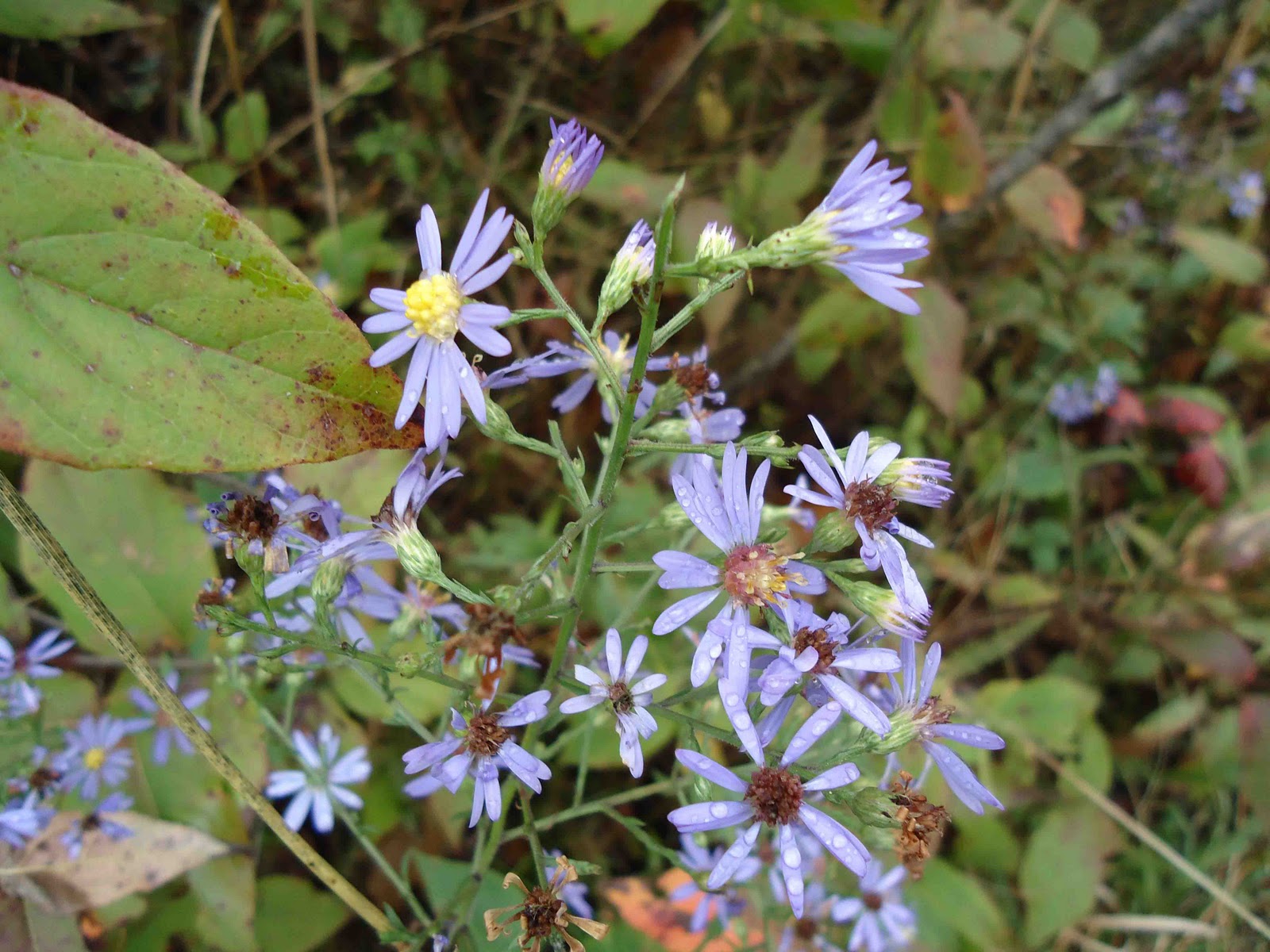
These were growing right next to the other berries...and I couldn't find them in any of our books either.


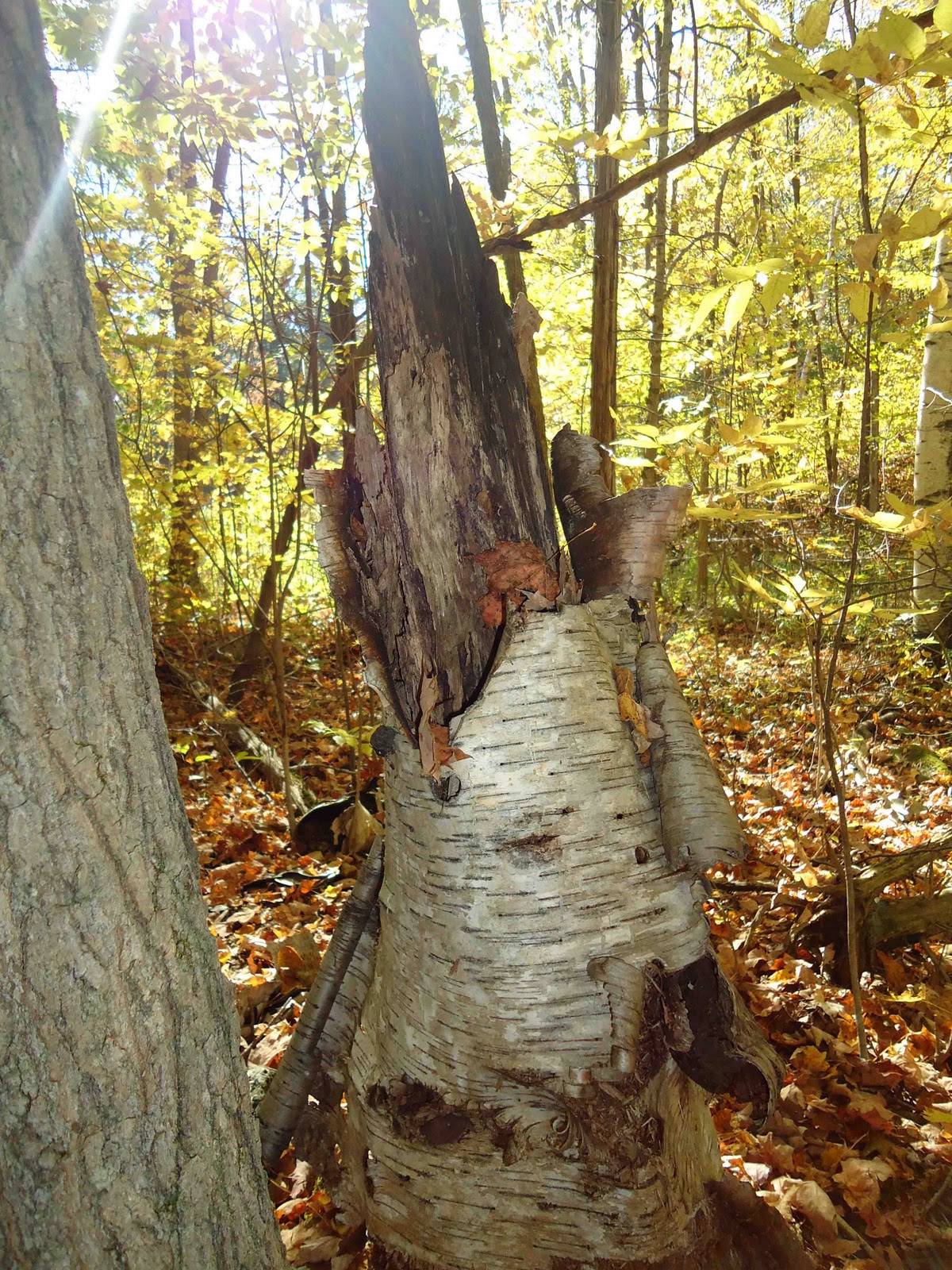
Early Canadian writing paper! (aka birch bark)


Owen marches to the beat of his own drum...walking stick and all!


We live in an area with lots of mica.  You find it on the ground now and again.  This piece was the thickest piece I'd seen yet.  Early settlers used this mineral for stove glass due to its ability to withstand high temperatures.  There is an old mica mine in Frontenac Park...worth a hike to see it!


The boys were on a steady search for juniper berries.  It took them off the beaten trail.


AH HA!  Found em!
The juniper bush only sprouts berries on the female trees.


Some valuable father-son time spent in the woods.


Hubbie took this pic as we were coming back from our trek in the woods.  This is the long shot of the beaver dam were started out at.


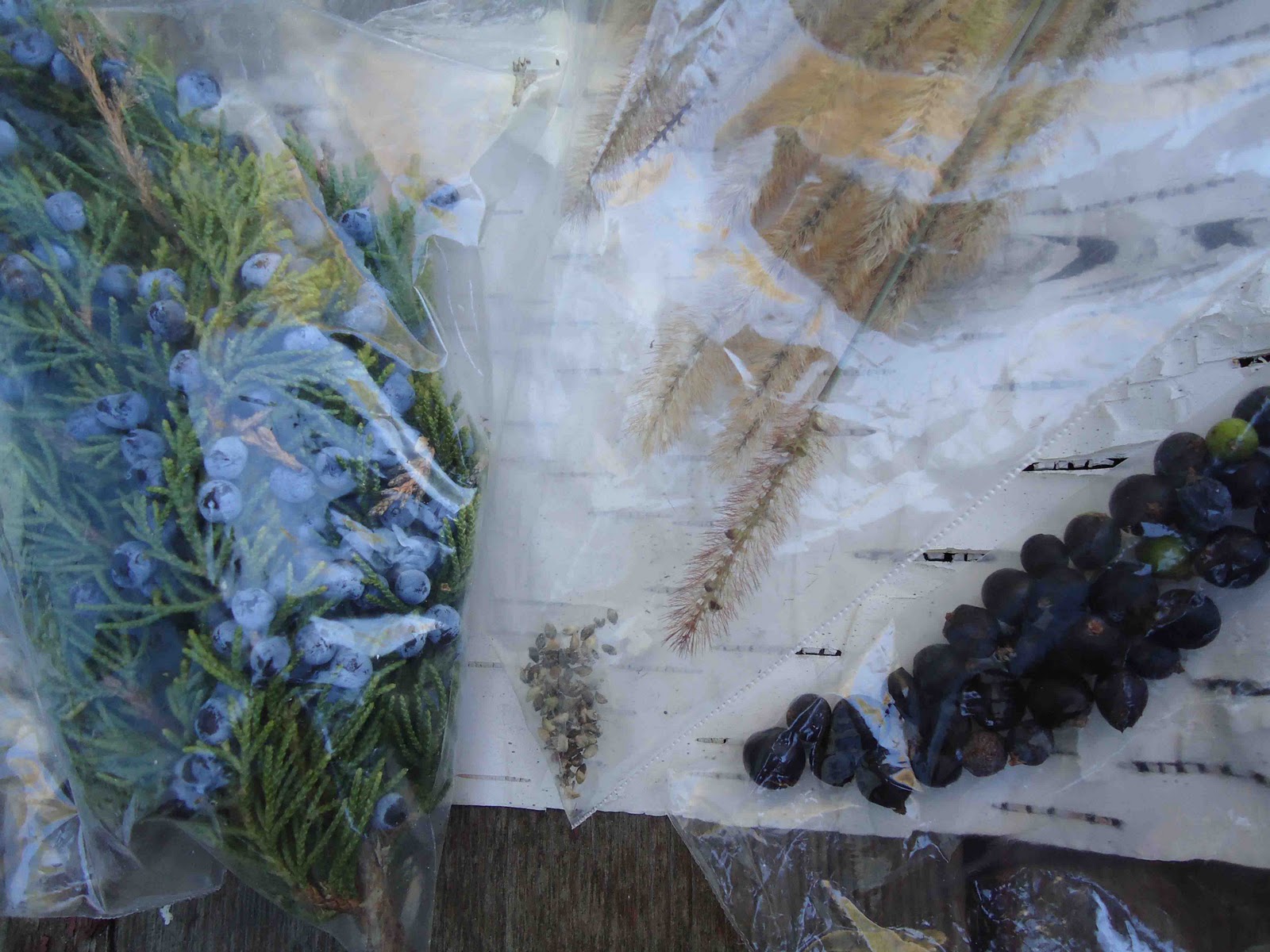
In the end we came back with Foxtail grass seeds, juniper berries and cedar berries.  The cedar berries were just falling off the trees in bunches, so I grabbed some on the way out and decided to look them up after we got home.


Foxtail grass is found just about ANYWHERE!  At this time of year...you can take the tops and knock them into a bag and collect seeds very easily, provided they are dark.  Turns out the sell a form of this seed at health food stores under the name of millet!  You can add it anywhere you would normally add poppy seeds.  You can grind it up using a grain mill and add a bit to your general baking.  We'll find out and let you know!


We had gone fishing a day or so ago...and while the boys were busy catching rock bass...I was looking for vauable foragables.  I ended up finding some wild grapes right next to our favorite fishing spot in Verona!!!  It was like finding gold!  I grabbed a few grapes and had Noah and Hubbie try it out.  It tasted just like Welch's grape juice!  (be careful of seeds though) I'll be sure to keep an eye on that spot for next year. 

Foraging seems to be an act of patience.  It requires restraint and knowledge.

I look forward to many more trips out with the family...(i thought I spied some massive glasswort and want to go back next year when its sweeter and new...rather than late in the season and woody.)  I will endeavour to read up on stuff this winter.  Next year should be full of foraging surprises...


What have you found in the woods? 

If you've ever foraged before, let me know what's your favorite forest goody?

Wednesday, October 12, 2011

A day in the wild...

Let me start by saying that this post has nothing to do with cooking or gardening...so you'll just have to bear with me.

After 7 weeks away in Ottawa, I really had to come to terms with the amount of time I had just spent away from my family and my home.  One of the things I had no idea I was going to miss was just being in nature.  It was such a simple thing that I missed.

The ability to go somewhere without hearing man made noise.

Fortunately, I am able to drive less than 20 min from my home and find such a place.  Even more fortunate am I that I have wonderful family that invites me to share in this place.


I drive the long country road that takes me to this place on a grey day that was threatening rain.


I feel not just that I have escaped from the city, but that I may have been transported back into the times of the settlers.  This may have been my backyard as an early pioneer in these parts.


Paddling around a secluded lake on a day without work.


Its actually the backyard of the hunting camp that is a part of my husband's family.  This day trip was not about hunting though.  It was about reconnecting.  With family, friends and nature.


The hunting camp started with humble beginnings but now features such luxuries as indoor toilets and a tv.


I was excited to get out on the bikes.  I haven't been on an atv run in a long while.  Its a popular past time with my in-laws...so I get to visit with them while exploring a raw and rudged landscape that swings from bold and beautiful to other-worldy and alien.


The familiar trees were oak and sumac.  Amazing that these trees could grow on top of not much more than rock.  The ground cover plants started to take on alien life forms.


Down a pine-needle filled pathway we discovered the gateway
to Scanlon Lake (or as some maps say Sexton Lake). 


The lake was misty and quiet.  Like glass laid in front of the rocks at the shoreline.  I could picture native gatherers crossing this body of water in stealthy canoes.  

We took our lunch break and enjoyed the peaceful quiet.   I could image early settlers fishing in small boats or playing one of the first recorded games of hockey. 


This was a relative of mine back in the early 1900's (picture actually taken in the Tweed area I believe).


I could picture this as my home.  I could be a hunter/gatherer and live in this land.  My mind began to race with the possibilities.  Is there enough in this rocky area to survive?  Our tour pressed on and my eyes were trying to spot the possibilities...


I suddenly wished I had spent the last 7 weeks reading Steve Brill's book call "Identifying & Harvesting Edible & Medicinal Plants in Wild (and not so wild) Places"...as I have no idea what these berries were.  They had a kind of spike on their leaf...so I took the hint and moved on.  It was on the verge of rain all afternoon...so I was glad that I HADN'T brought the book with me.


Mushrooms are another thing I know virtually nothing about...I can spot a puffball and a morel with confidence, but that is where I draw the line.  These white suckers were enormous!  Probably could have made a meal out of each of them....but I was smart enough to take pictures now and do the research later.


One of the great things about this property is the personal history.  There is a monument built to my mother-in-law's parents Chester and Sarah.  It represents a spectacular view of the property and a connection to nature that is being passed down through the generations.  Owen is the next family member in our wee family that has yet to see the monument. 


On the plaque is the phrase "Some people go their whole lives, without seeing anything like this".  A pause to reflect how true that statement really is.


At what felt like the peak of a mountain, the landscape started to feel alien.  The groundcover plants looked like they should have been grown in an aquarium.  The textures of these plants were spectacular!  Spikey stars with bright orange mushrooms erupting from them. 


Like coral but on the surface of a rock! 


Wild strawberries and their runners in action.


Moss that looks like shag carpeting...


Juniper berries by the bucketload...but not quite ripe enough.


Moss that appears to form little higways aross the rocks...


I could imagine pioneer beaver trappers traversing through land like this to make their wages.


The rocks suddenly changed the colour of the landscape!


We could see the rain coming in the distance and decided to head on back to the camp. 


I had one last commune with the landscape before it was time to head back to my home in cottage country.  My mind was filled with thoughts of early settler life, getting back to basics and reading that encyclopedia by Steve Brill.  I vow to know more edible plants the next time I get invited back to the hunting camp.


What do you do to escape the urban sprawl and get back in touch with our natural selves?